

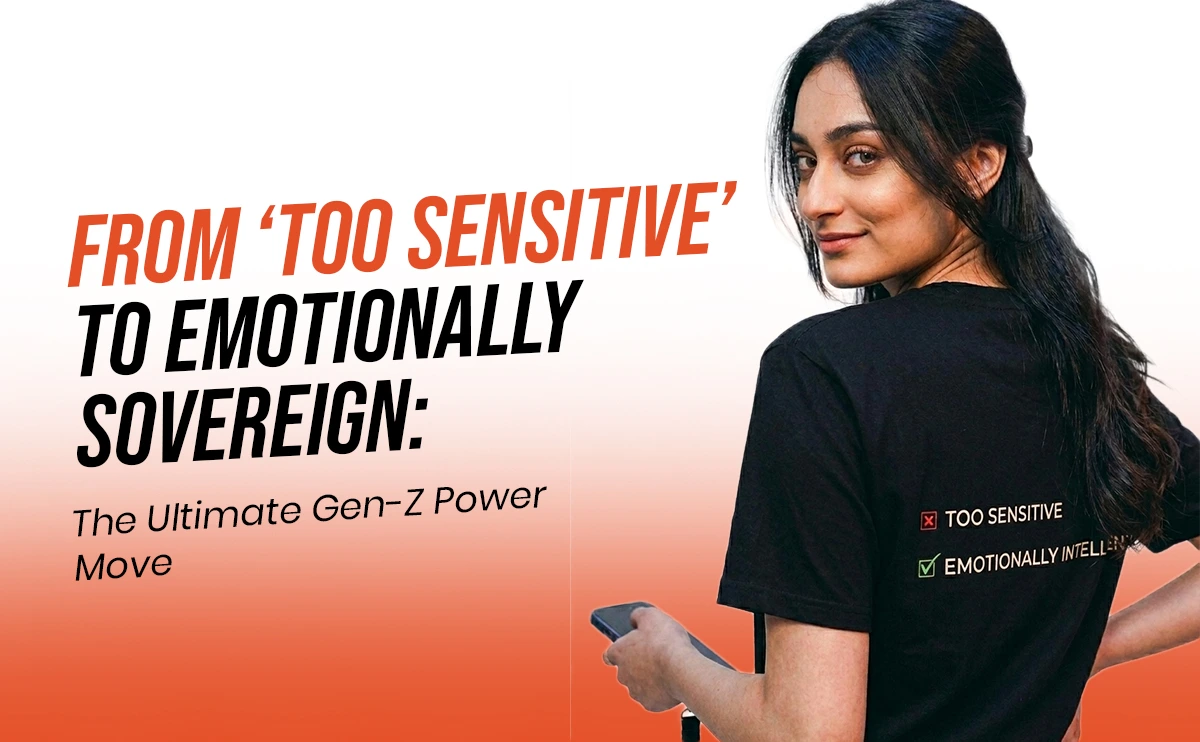
Let’s get one thing straight: we’re not here for your comfort.
For years, the headline has been the same. The critique from op-eds, talking heads, and confused relatives is a broken record: Gen-Z is too sensitive. They can’t take a joke. They need trigger warnings for everything. They’re canceling the world.
We’ve heard it. We’ve rolled our eyes so hard we’ve seen our own brains. And we’re done explaining.
Because what you call “too sensitive,” we call the foundational skill for surviving—and changing—a broken world. We don’t have a sensitivity problem. You have a comprehension problem. You’re mistaking our greatest strength for a weakness.
Let’s reframe.
What You Call “Sensitivity,” We Call Emotional Data
To call a generation that navigates global pandemics, climate dread, and economic instability before they’re 25 “soft” is not just incorrect; it’s a profound failure of imagination. We are not fragile. We are finely tuned.
Our so-called “sensitivity” is a high-resolution radar system. It picks up on micro-aggressions because we understand how small cuts create deep scars. It flags outdated jokes because we know humor that punches down isn’t humor—it’s propaganda. We feel the collective anxiety in the room because we’re wired for empathy in a world on fire.
This isn’t weakness. This is advanced human software. While you were taught to compartmentalize, we were taught to integrate. We process emotional data as critical intelligence, and that intelligence informs every decision we make—from who we work for, to what we buy, to who we let into our lives.
The Radical Act of Setting a Boundary
This is where the real “problem” lies for the critics. Our emotional intelligence has a non-negotiable byproduct: boundaries.
- You call it “ghosting” when we leave a toxic situationship. We call it a strategic retreat.
- You call it “disloyalty” when we leave a job that pays in burnout. We call it knowing our worth.
- You call it “cancel culture” when we hold a brand accountable for its ethics. We call it being a conscious consumer.
A boundary is simply a statement: My peace is more important than your opinion of me. For a generation raised on the tyranny of “likes” and public performance, deciding what you will not accept is the most revolutionary act of self-love there is. It’s not an attack on you. It’s a defense of us.
And it terrifies a system built on our compliance.
From Emotional Intelligence to Emotional Sovereignty
Intelligence is one thing. Sovereignty is the ultimate goal.
Being emotionally intelligent means understanding your feelings and their impact. Being emotionally sovereign means you own them completely. You are the author of your emotional narrative, no longer outsourcing your self-worth to the opinions, criticisms, or validation of others.
This is the power move you’re seeing—and misreading—everywhere:
- In the friend who says, “I don’t have the capacity for that drama right now.”
- In the employee who declines a weekend email with “That can wait until Monday.”
- In the collective “no” to hustle culture, to unsustainable fashion, to relationships that feel like work.
Sovereignty is quiet. It’s firm. It doesn’t need to scream, because it doesn’t need your permission. It is the final stage of a generation realizing that the ultimate authority on our lives is, and always has been, us.
This Isn’t a Complaint. It’s a Blueprint.
So, wear the “too sensitive” label if they hand it to you. Then, reclaim it.
Every time you prioritize a real conversation over a polite one, you’re using that sensitivity.
Every time you choose a boundary over burnout, you’re using that sensitivity.
Every time you demand that the world be more just, more kind, or more sane, you’re using that sensitivity as your fuel.
We’re not breaking down. We’re breaking ground.
We’re the generation that feels everything—the injustice, the instability, the anxiety—and has decided, consciously, to build something better from that feeling. Our sensitivity is the raw material. Our sovereignty is the tool. The future we’re building is the project.
And we’re not asking for a seat at your table. We’re building our own.